

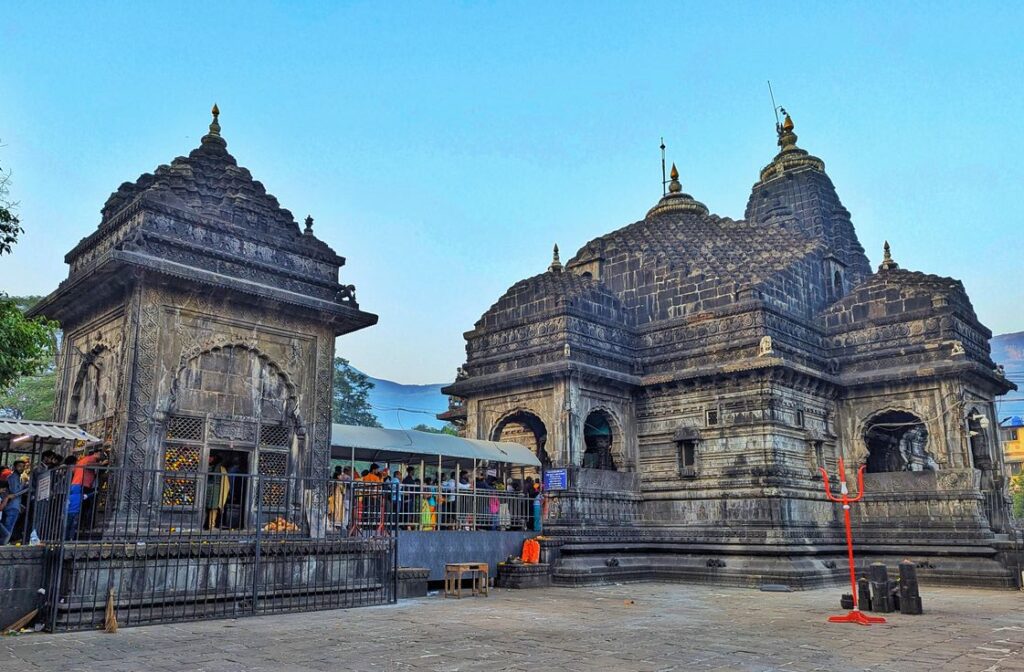
About Trimbakeshwar Jyotirlinga Temple
Trimbakeshwar Jyotirlinga Temple is one of India’s most revered Shiva temples and one of the twelve Jyotirlingas dedicated to Lord Shiva. Located in Trimbak, near Nashik in Maharashtra, the temple is an important Hindu pilgrimage destination associated with the sacred Godavari River and the Brahmagiri Hills.
The temple is especially unique because its Jyotirlinga is traditionally described as having three faces representing Lord Brahma, Lord Vishnu and Lord Shiva. The present temple structure was built by Peshwa Balaji Baji Rao in the 18th century and is known for its distinctive black-stone architecture and deep spiritual significance.
Devotees visit Trimbakeshwar to offer prayers to Lord Shiva, perform traditional religious rituals and explore the sacred sites associated with the origin of the Godavari River.
Quick Facts
| Information | Details |
|---|---|
| Temple Name | Trimbakeshwar Jyotirlinga Temple |
| Location | Trimbak, Nashik district, Maharashtra, India |
| Deity | Lord Shiva |
| Famous For | Trimbakeshwar Jyotirlinga and the sacred Godavari River |
| Jyotirlinga | One of the 12 Jyotirlingas of Lord Shiva |
| Temple Architecture | Traditional black-stone architecture |
| Built By | Peshwa Balaji Baji Rao, during 1740–1760 |
| Nearest Major Railway Station | Nashik Road Railway Station, approximately 39–40 km away |
| Nearest Airport | Nashik Airport, approximately 40–55 km away, depending on the route |
| Distance from Nashik City | Approximately 28–30 km |
| Ideal Duration | Half a day to 1 day for the temple visit; 2 days for nearby sightseeing |
Highlights
- One of the twelve sacred Jyotirlingas dedicated to Lord Shiva
- Unique three-faced Jyotirlinga associated with the Hindu Trinity
- Located near Brahmagiri Hill, traditionally associated with the origin of the Godavari River
- Ancient pilgrimage destination with distinctive black-stone temple architecture
- Sacred Kushavarta Kund, associated with the Godavari River
- Important destination for Shiva worship, traditional poojas and religious ceremonies
- Located near other spiritual attractions in Nashik and Trimbak
Darshan, Timings & Rituals
Trimbakeshwar Jyotirlinga Temple welcomes devotees throughout the year. According to the official Trimbakeshwar Devasthan Trust website, the general darshan hours are from 5:30 AM to 9:00 PM. Timings and access arrangements may change during festivals, special ceremonies or other circumstances, so visitors should confirm the latest schedule before travelling.
Darshan: Devotees can visit the temple during its designated darshan hours to offer prayers to Lord Shiva. Entry arrangements and access to specific areas may be subject to temple rules.
Daily Rituals: The temple observes traditional daily worship and poojas dedicated to Lord Shiva. Morning and midday rituals form part of the temple’s regular religious schedule.
Special Poojas: Trimbakeshwar is known for traditional Vedic rituals performed by priests, including Narayan Nagbali, Kaal Sarp Dosh Nivaran and Tripindi Shraddha. These ceremonies have specific procedures and booking requirements, which devotees should confirm with the temple authorities or an appropriate priest.
Best Time to Visit
October to March is generally a comfortable period to visit Trimbakeshwar Jyotirlinga Temple because the weather is usually pleasant for temple darshan and local sightseeing.
The monsoon season, from June to September, brings greenery and scenic views around Brahmagiri Hill, although heavy rainfall may affect road conditions and outdoor activities.
Mahashivratri and the Shravan month are particularly significant for devotees of Lord Shiva. Trimbakeshwar and the wider Nashik region also become important pilgrimage destinations during Simhastha Kumbh Mela, which is held periodically. Visitors travelling during major festivals should plan accommodation and transport well in advance.
How to Reach
By Air: Nashik Airport is a nearby airport option. Travellers can continue by road to Trimbakeshwar. Depending on flight availability, other airports may also be considered when planning the journey.
By Train: Nashik Road Railway Station is the nearest major railway station, approximately 39–40 km from Trimbakeshwar. Taxis and other road transport options are available for the onward journey.
By Road: Trimbakeshwar is approximately 28–30 km from Nashik city and is connected by road. Visitors can travel by taxi, private vehicle or available bus services.
Suggested Itinerary
Day 1: Arrive in Nashik or Trimbak and visit Trimbakeshwar Jyotirlinga Temple for darshan. Explore the sacred Kushavarta Kund and nearby religious sites. If time permits, visit other attractions around Trimbak before returning to your accommodation.
Day 2: Visit nearby spiritual attractions such as Brahmagiri Hill and Gangadwar, subject to weather and access conditions. You can also explore selected temples and pilgrimage sites in Nashik before continuing your journey.
Explore Nearby
Kushavarta Kund: A sacred water tank near Trimbakeshwar Temple, traditionally associated with the Godavari River. It is an important site for religious observances and pilgrimage rituals.
Brahmagiri Hill: A sacred hill overlooking Trimbak that holds religious significance in connection with Sage Gautama and the origin of the Godavari River. Access to trekking routes depends on weather and local conditions.
Gangadwar: A sacred site on Brahmagiri Hill traditionally associated with the emergence of the Godavari River. Visitors should check local access conditions before planning the visit.
Anjaneri Hills: A well-known hill destination near Nashik associated in local tradition with the birthplace of Lord Hanuman. It is popular among pilgrims, nature enthusiasts and trekkers.
Panchavati, Nashik: A major religious area associated with the Ramayana, featuring important sites such as Kalaram Temple and Sita Gufa.
Where to Stay
Visitors can find accommodation options in Trimbak and Nashik, including budget hotels, guesthouses and other stays suitable for pilgrims. Staying in Trimbak can be convenient for an early temple visit, while Nashik offers additional accommodation and transport choices.
Explore Trusted Stays Near Trimbakeshwar →
Festivals
Mahashivratri: One of the most important festivals dedicated to Lord Shiva, observed with special prayers, worship and religious activities.
Shravan Month: The holy month of Shravan is particularly significant for Shiva devotees, who visit the temple to offer prayers and perform religious observances.
Simhastha Kumbh Mela: The Nashik-Trimbakeshwar region hosts the Simhastha Kumbh Mela periodically, attracting large numbers of pilgrims for sacred bathing, worship and religious gatherings.
Kartik Purnima: This sacred occasion is observed by many Hindu devotees with prayers, worship and other religious activities.
Travel Tips
- Confirm the latest darshan timings and temple entry rules before travelling.
- Check special pooja procedures and booking requirements in advance if you plan to perform a religious ceremony.
- Wear modest clothing suitable for visiting a Hindu temple.
- Allow extra time during Mondays, Shravan, Mahashivratri and major pilgrimage events.
- Check the weather before visiting Brahmagiri Hill or planning outdoor activities.
- Keep your belongings secure and follow instructions issued by temple authorities.
- Book accommodation in advance during festivals and peak pilgrimage periods.
- Respect temple customs and follow local guidance regarding photography and restricted areas.
FAQs
Where is Trimbakeshwar Jyotirlinga Temple located?
Trimbakeshwar Jyotirlinga Temple is located in Trimbak, approximately 28–30 km from Nashik city in Maharashtra, India.
Is Trimbakeshwar one of the 12 Jyotirlingas?
Yes. Trimbakeshwar is one of the twelve sacred Jyotirlingas dedicated to Lord Shiva and is an important destination for Shiva devotees.
What makes Trimbakeshwar Jyotirlinga unique?
The Jyotirlinga at Trimbakeshwar is traditionally described as having three faces representing Lord Brahma, Lord Vishnu and Lord Shiva, making it distinctive among the twelve Jyotirlingas.
What are the darshan timings at Trimbakeshwar Temple?
The official Trimbakeshwar Devasthan Trust website lists general darshan hours as 5:30 AM to 9:00 PM. Visitors should confirm current timings before travelling because schedules may change.
What is the best time to visit Trimbakeshwar Temple?
October to March is generally comfortable for temple darshan and sightseeing. Mahashivratri and the Shravan month are also significant religious periods, although they can attract larger crowds.
How do you reach Trimbakeshwar Jyotirlinga Temple?
Visitors can travel by train to Nashik Road Railway Station and continue by road, or reach Nashik by air and travel onward to Trimbak. The temple is also accessible by road from Nashik city.
Which river is associated with Trimbakeshwar Temple?
Trimbakeshwar is traditionally associated with the origin of the Godavari River, one of India’s major rivers. Brahmagiri Hill and Kushavarta Kund are important sacred sites connected with this tradition.
Which poojas are performed at Trimbakeshwar?
Trimbakeshwar is known for traditional Shiva worship and special religious ceremonies, including Narayan Nagbali, Kaal Sarp Dosh Nivaran and Tripindi Shraddha. Procedures and booking arrangements should be confirmed before the visit.
How much time is needed to visit Trimbakeshwar Temple?
Half a day to one day is generally sufficient for temple darshan and nearby sacred sites. Allow additional time if you plan to explore Nashik or visit Brahmagiri Hill.
Which places can be visited near Trimbakeshwar Temple?
Nearby attractions include Kushavarta Kund, Brahmagiri Hill, Gangadwar, Anjaneri Hills and Panchavati in Nashik. Check local conditions and travel times when planning your itinerary.


