

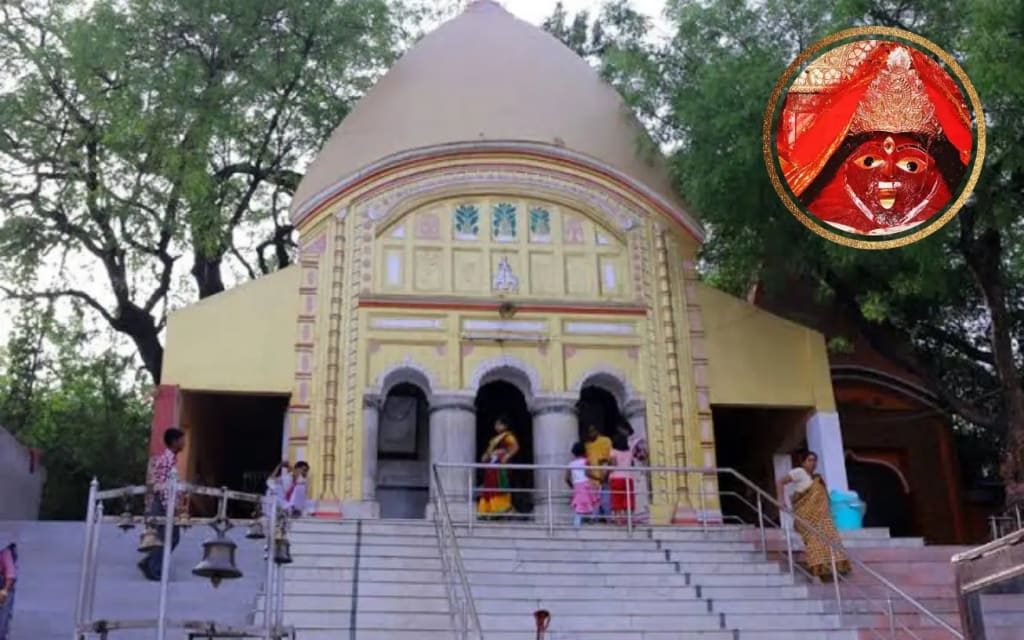
The Nalhati Shakti Peeth (celebrated globally as the historic Nalateswari Temple), situated on a scenic hillock in the peaceful town of Nalhati in the Birbhum district of West Bengal, is one of the most spiritually profound, ancient, and tranquil shrines in Eastern India. Located in the famous Rarh region of Bengal, which is globally celebrated for housing a high concentration of powerful Shakti shrines, this historic temple is celebrated as one of the prominent 51 sacred Shakti Peethas.
Representing the windpipe or trachea (Nala) of Goddess Sati, this temple stands as a monumental symbol of cosmic breath, life-force energy, and absolute purification, drawing thousands of pilgrims, yogis, and spiritual seekers every year.
🌸 Nalhati Shakti Peeth: Quick Facts & Overview
| Information | Details |
|---|---|
| Temple Name | Nalhati Shakti Peeth (Nalateswari Temple / Kalika Mandir) |
| Location | Nalhati Hill, Nalhati Town, Birbhum District, West Bengal, India |
| Coordinates | $24.3005^\circ \text{N}, 87.8222^\circ \text{E}$ |
| Temple Timings | 6:00 AM to 8:30 PM |
| Best Time to Visit | October to March (during pleasant winter months, Chaitra Navratri, and Kali Puja) |
| Nearest Airport | Kazi Nazrul Islam Airport, Durgapur (approx. 105 km away) | Netaji Subhash Chandra Bose International Airport, Kolkata (approx. 230 km away) |
| Nearest Railway Station | Nalhati Junction Railway Station (approx. 1.5 km away) |
| State | West Bengal |
| Famous For | Sati’s Windpipe / Trachea (Nala Peeth), naturally red-colored larynx stone, unique “sweet-leaf” neem tree, hilltop forest views |
🏛️ Overview of the Holy Landscape
The Nalhati Shakti Peeth features a spectacular, traditional terracotta and concrete architectural style, showcasing Bengal’s classic char-chala (four-roofed) design elements. Perched gracefully on the flat summit of the red-soil Nalhati Hill, the temple is surrounded by a serene forest of neem and banyan trees, offering sweeping panoramic views of the green agricultural plains of Birbhum. Dedicated to Goddess Parvati in her highly protective and nurturing form as Maa Kalika (locally worshipped as Maa Nalateswari), the temple is housed in a beautifully maintained stone-walled compound.
This serene, highly energetic environment offers a profoundly quiet, meditative, and high-energy spiritual sanctuary away from bustling city centers, allowing pilgrims to easily sit, meditate, and absorb the deep cosmic energy of the Divine Mother.
📜 The Sacred Legend of Sati’s Windpipe & Goddess Kalika
According to ancient scriptures, including the Devi Bhagavata Purana and the Tantra Chudamani, the holy geography of Birbhum is recognized as an extraordinary concentration of divine energy. The legend states that when Lord Vishnu severed the lifeless body of Goddess Sati with his Sudarshana Chakra to stop the cosmic dance of destruction (Tandava) of Lord Shiva, her windpipe or trachea (Nala) fell at this precise mountain location.
In this holy Peeth, the divine mother is worshipped as Maa Kalika (representing the primordial, time-controlling energy of creation and destruction) and her consort, Lord Shiva, is worshipped nearby as Lord Yogesha (representing the supreme Lord of Yoga and the silent witness of the cosmos).
The name Nalhati is deeply tied to the fallen limb. The Sanskrit word Nala translates to a pipe or windpipe, and the word Hati (or Hata) refers to the fall or strike, giving this historic town its eternal name. In spiritual symbolism, the windpipe represents the physical pathway of the breath (Prana) and the primary channel of vocalization and sound. Worshipping here is believed to completely heal respiratory issues, clear speech-related blockages, and bless the seeker with immense focus, wisdom, and absolute purification of the physical and subtle energy bodies.
⏳ Temple History & Monastic Legacy
The historical roots of the Nalhati Shakti Peeth are deeply ancient, with records suggesting that a holy spot of worship has existed on these hills for over a thousand years. Classical references to the sacred “Nala” mountain and the larynx-fall of the Goddess are found in the ancient Tantras, the Pithamala, and the regional oral chronicles of Bengal.
For centuries, due to its remote, elevated, and forest-sheltered location, the hill served as a major sanctuary where great Tantric ascetics, saints of the Nath tradition, and yogis performed silent, deep internal meditations.
The modern structured temple was built around 250 years ago under the spiritual guidance and financial patronage of a local landlord named Ramjiban Dev Sharma, who discovered the hidden stone deity in the forest. Later, the rulers of the Cossimbazar Estate restored the stone staircases and built paved pathways leading to the base, preserving the ancient heritage while making this high-energy power center highly accessible for modern travelers.
✨ Spiritual Significance & Unique Blessings
Goddess Kalika represents the ultimate power of spiritual intellect, vital breath, and the absolute destruction of dark egoistic forces.
The temple is especially visited by devotees seeking:
- The Red Larynx Stone: Inside the inner sanctum (Garbhagriha), there is no conventional clay or metal idol of the Goddess. Instead, devotees offer prayers directly to a natural, reddish-colored stone that physically resembles a larynx and trachea. The stone is kept beautifully decorated under a silver canopy, and despite receiving large quantities of water and milk during daily bathing rituals (Abhishekam), the water miraculously drains away instantly through a hidden opening.
- The Miracle of the Sweet Neem Tree: Directly adjacent to the main temple compound stands an ancient, sacred Neem tree. In a unique botanical miracle, the leaves of one specific branch of this tree are naturally sweet, completely lacking the characteristic bitter taste of neem, which local legends attribute to the direct motherly touch of Maa Nalateswari.
- Tying the Wish-Fulfilling Sacred Thread: To seek the protective shield of Maa Kalika, devotees traditionally tie a sacred red thread (Kalawa) around the branches of the ancient banyan trees in the temple courtyard, returning to untie it once their prayers are successfully answered.
⏰ Darshan Timings & Daily Rituals
The temple operates on a highly structured schedule to allow for the continuous performance of sacred decorative and food offering rituals:
- Daily Darshan: 6:00 AM to 8:30 PM
- (Note: During the highly auspicious days of Chaitra Navratri, Ashwin Navratri, and the grand Kali Puja in autumn, the temple remains open continuously for extended hours to accommodate the massive influx of pilgrims).
Major Daily Rituals
- Pratah Snana & Shringar: Performed daily at 6:30 AM to open the temple doors, featuring the ceremonial cleaning of the altar, application of fresh red vermilion (Sindoor), and draping the Goddess in a beautiful silk saree.
- Maha Naivedya Bhog: Offered daily at 12:30 PM, featuring traditional cooked rice (Anna), lentils, seasonal vegetable curries, and sweets, during which the main gates are briefly restricted for 15 minutes.
- Sandhya Aarti: A deeply spiritual and atmospheric evening prayer held at sunset (around 6:30 PM), where traditional camphor and ghee lamps are waved, creating a highly energized spiritual environment.
🚶 How to Reach Nalhati Temple
Nalhati is a well-connected town located in the northern part of the Birbhum district, West Bengal.
By Road
- From Tarapith: Located approximately 45 km north via the smooth national highway. The drive takes about 1 hour.
- From Kolkata: Approximately 230 km away via NH-19 (approx. 5 hours drive).
- Regular state transport buses (SBSTC) and private deluxe coaches run constantly from Kolkata (Esplanade), Durgapur, and Siuri directly to the Nalhati central bus stand.
By Train
- Nearest Station: Nalhati Junction Railway Station (NH) is located just 1.5 km from the temple. It is a major local junction highly connected to Howrah, Sealdah, and New Jalpaiguri via daily superfast trains.
- From the railway station, you can easily hire a local shared electric cab (Toto) or cycle-rickshaw to reach the temple hill in under 10 minutes.
By Air
- Nearest Airport: Kazi Nazrul Islam Airport (RDP) in Durgapur is located approximately 105 km from the temple.
- Nearest International Airport: Netaji Subhash Chandra Bose International Airport (CCU) in Kolkata, located approximately 230 km away. From Kolkata, you can comfortably book a direct private taxi or catch a superfast train from Howrah.
🗺️ Nearby Places to Visit
- Tarapith Temple: The world-famous, highly sacred Tantric temple town dedicated to Maa Tara, located just 45 km away from Nalhati.
- Bakreshwar Hot Springs: A spectacular geological and spiritual site famous for its volcanic hot springs and Shakti Peeth, located 75 km away.
- Kankalitala Shaktipeeth: A highly historic temple representing the waist of Goddess Sati, located near Bolpur (approx. 70 km away).
- Nalhati Eco Park: A beautiful, newly developed green park situated on the slopes of the Nalhati Hill, perfect for family picnics and scenic sunset walks.
💡 Essential Travel Tips
- Exact Focus Keyword for Rank Math: When publishing this post, ensure you set the Focus Keyword exactly as
Nalhati Shakti Peeth. - Climb Slowly: The temple is situated on a hillock. Paved ramps and wide stone staircases exist, making the climb easy, but elderly travelers should take their time and stay hydrated.
- Carry Physical Cash: Since Nalhati is a peaceful rural town, local flower sellers, manual rickshaws, and sweet vendors mostly prefer physical cash over digital transfers or international cards.
- Dress Modestly: Wear conservative, comfortable, and respectful traditional clothing. Sarees, salwar suits, and kurtas with trousers are highly recommended.
❓ FAQs
Why is Nalhati Shakti Peeth famous?
Nalhati Shakti Peeth is famous as one of the highly sacred 51 Shakti Peethas, marking the precise spot where Sati’s windpipe fell, and is globally celebrated for its unique red larynx-stone worship and its miraculous sweet neem tree.
Which body part of Goddess Sati fell at Nalhati?
According to ancient scriptures, the windpipe or trachea (Nala) of Goddess Sati fell near the top of the Nalhati Hill in Birbhum, West Bengal.
Who is the Bhairav of Nalhati Shakti Peeth?
The Bhairav associated with the Nalhati Shakti Peeth is Lord Yogesha, a highly protective and powerful manifestation of Lord Shiva representing the Lord of Yoga.
Is photography allowed inside the temple?
While you can freely photograph the gorgeous hill landscapes, the surrounding eco-park, and the temple exterior, photography and video recording are strictly prohibited inside the main inner sanctum.
What is the nearest major railway station?
The nearest railway station is Nalhati Junction Railway Station (NH), located approximately 1.5 km away, which has direct train connections to Kolkata and other major cities.


