

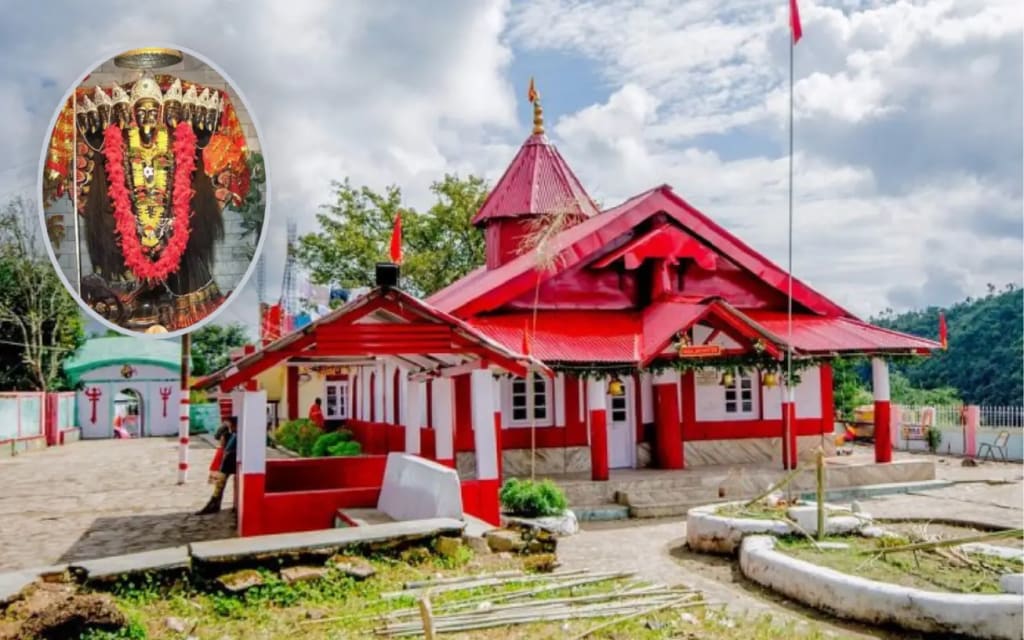
The Jayanti Shakti Peeth (popularly known as the Nartiang Durga Temple), situated atop a scenic hillock in the historic village of Nartiang in the West Jaintia Hills district of Meghalaya, is one of the most spiritually profound, ancient, and culturally unique shrines in Northeast India. Perched amidst the mist-shrouded hills and sacred megalithic structures of Meghalaya, this historic sanctuary is celebrated as one of the prominent 51 sacred Shakti Peethas. Marking the divine spot where the left thigh of Goddess Sati is believed to have fallen, the temple stands as a monumental symbol of active protection, tribal-Hindu syncretism, and absolute maternal grace, drawing thousands of devotees, researchers, and spiritual seekers every year.
🌸 Jayanti Temple: Quick Facts & Overview
| Information | Details |
|---|---|
| Temple Name | Jayanti Shakti Peeth (Nartiang Durga Temple) |
| Location | Nartiang Village, West Jaintia Hills District, Meghalaya |
| Temple Timings | 6:00 AM to 6:00 PM |
| Best Time to Visit | October to March (during pleasant winter months and Durga Puja) |
| Nearest Airport | Shillong Airport, Umroi (approx. 60 km) / Guwahati Airport (approx. 165 km) |
| Nearest Railway Station | Guwahati Railway Station (approx. 150 km away) |
| State | Meghalaya |
| Famous For | Left Thigh of Goddess Sati (Uru Peeth), 500-year-old Jaintia tribal rituals, ancient weapons display |
🏛️ Overview
The Jayanti Shakti Peeth is a spectacular, red-roofed structural temple built with a beautiful blend of traditional Jaintia tribal design and classic Bengali-Hindu architectural elements. Dedicated to Goddess Durga in her highly protective and victorious manifestation as Maa Jayanti, the temple features a unique inner sanctum where the deity is worshipped through a highly sacred, ancient stone mound covered in brass and silver plates. Located near the world-famous Nartiang Megaliths, this peaceful hill sanctuary offers a deeply meditative and serene environment where pilgrims can experience the raw, pristine spiritual energy of the hills.
📜 About Jayanti Shakti Peeth
According to ancient scriptures, the Shiva Purana, the Devi Bhagavata Purana, and the sacred Tantra Chudamani, the hills of Northeast India are recognized as an extraordinary concentration of divine energy. The legend states that when Lord Vishnu severed the lifeless body of Goddess Sati with his Sudarshana Chakra to stop the cosmic dance of destruction (Tandava) of Lord Shiva, her left thigh (Uru) fell at this precise location in the Jaintia Hills.
In this holy Peeth, the divine mother is worshipped as Maa Jayanti (representing the ultimate victorious goddess who conquers all internal and external evils) and her consort, Lord Shiva, is worshipped as Lord Kramadishwar (representing the supreme controller of the cosmic order). The left thigh represents physical stability, support, and the primary kinetic energy of progress. Worshipping here is believed to remove deep-seated professional obstacles, heal physical leg and bone-related disorders, and bless the devotee with unwavering courage and victory over worldly challenges.
⏳ Temple History
The historical roots of the Jayanti Shakti Peeth are deep and fascinating, stretching back over 500 years to the glorious reign of the Jaintia Kings. Originally, the Jaintia tribal royalty practiced traditional indigenous faiths, but they warmly embraced Shaktism in the 16th century. According to local historical chronicles, the Jaintia King Jaso Manik constructed the structured temple at Nartiang after receiving a divine dream from Goddess Durga.
To ensure the highest quality of rituals, the king brought high-class Brahmin priests from Maharashtra and Bengal, whose direct descendants continue to serve as the official head priests of the temple to this day. The temple was built like a fortress overlooking the Myntdu River, featuring thick stone walls and secret underground tunnels. Despite facing major regional shifts and a massive historical earthquake in 1897, the temple was carefully restored by the local community. Today, it stands as a majestic symbol of tribal-Hindu cultural synthesis and the living heritage of Meghalaya.
✨ Spiritual Significance
Goddess Jayanti represents the absolute, victorious cosmic force of nature that protects her children and grants ultimate success.
The temple is especially visited by devotees seeking:
- The Tribal Durga Puja Rituals: Durga Puja is the most unique and famous festival celebrated at this Peeth. Following ancient Jaintia tribal customs, the festival is celebrated with great intensity. A banana plant is dressed in a magnificent saree and worshipped as Kala Bou (the banana bride). Uniquely, the animal sacrifice ritual is performed by dressing the sacrificial goat in a traditional human dhoti and turban before offering it, symbolizing the ancient symbolic replacement of human sacrifice.
- The Historic Sacred Weapons: Inside the temple courtyard, devotees can view a spectacular collection of heavy historic swords, shields, and cannons used by the Jaintia kings and general U Kiang Nangbah. Worshipping these weapons is believed to instill immense courage and clear negative energy blocks.
- The Megalithic Energy: The temple is situated just 2 km from the Nartiang Megaliths Garden, which houses the tallest monoliths in the world. Walking among these giant 500-year-old stone pillars before entering the temple is believed to ground the physical aura and connect the mind to natural energies.
⏰ Darshan Timings & Rituals
Temple Timings
The temple is open daily, following a simple daylight-aligned mountain schedule to ensure visitor safety:
- Daily Darshan: 6:00 AM to 6:00 PM
(Note: During the four days of Durga Puja and the Navratri festivals, the temple remains open for extended hours, starting as early as 4:30 AM to accommodate the heavy rush of pilgrims from across Northeast India).
Major Rituals
- Pratah Abhishek & Shringar: Conducted daily at 6:30 AM, involving the holy bath of the sacred stone, applying vermilion, and offering fresh wild mountain flowers.
- Mangal Aarti: Held daily at 7:00 AM with the blowing of traditional conch shells, beating of local drums (Ksing), and singing of ancestral hymns.
- Anna Bhog Offering: Offered daily at 12:30 PM, featuring local red rice, wild mountain vegetables, and traditional sweets, during which the gates are closed briefly for 30 minutes.
- Sandhya Aarti: A deeply spiritual and atmospheric evening prayer held at sunset (around 5:30 PM), where clay lamps are lit, reflecting beautifully against the red roof of the temple.
🚶 How to Reach Jayanti Temple
Nartiang village is highly accessible from the state capital Shillong and the major city of Jowai.
By Road
- From Shillong: The distance is approximately 65 km east via the smooth, scenic National Highway 6. The drive is exceptionally beautiful, passing through mist-shrouded valleys and pine forests, and takes about 2 hours.
- From Jowai: Located just 24 km north of Jowai (the district headquarters). The drive takes about 45 minutes.
- Regular local shared taxis (Sumos and Alto cabs) run constantly from the Anjalee petrol pump stand in Shillong and the Jowai bus stand directly to Nartiang village.
By Air
- Nearest Domestic Airport: Shillong Airport (SHL) in Umroi, located approximately 60 km away. It has regular flights connecting to Kolkata and Guwahati.
- Nearest International Airport: Lokpriya Gopinath Bordoloi International Airport (GAU) in Guwahati, located approximately 165 km away. From the airport, you can comfortably hire a direct private taxi to reach Nartiang.
By Train
- Nearest Major Station: Guwahati Railway Station (GHY) is located approximately 150 km from the temple. It is a major rail hub with daily superfast trains connecting to all corners of India. You can comfortably hire a direct tourist cab from the station to reach Nartiang in about 4 hours.
🗺️ Nearby Places to Visit
- Nartiang Megaliths: Located just 2 km away, housing a spectacular collection of hundreds of massive stone monoliths erected by Jaintia kings, including the tallest monolith in the world standing at 8 meters.
- Tyrshi Falls: A breathtaking, three-tiered roaring waterfall located 20 km away near Jowai, offering spectacular panoramic views of the green paddy fields.
- Thadlaskein Lake: A beautiful, historic man-made lake located 18 km away along the highway, perfect for boating and afternoon picnics.
- Krang Suri Falls: One of the most stunning, magical blue-water waterfalls in India, located 50 km from Nartiang, famous for its pristine natural swimming pool.
💡 Travel Tips
- Exact Focus Keyword for Rank Math: When publishing this post, ensure you set the Focus Keyword exactly as
Jayanti Shakti Peeth Meghalaya. - Combine with Megalithic Tour: Allocate at least 1 hour to visit the adjacent Nartiang Megaliths Garden to experience the monumental stone heritage of Meghalaya.
- Pack Light Warm Wear: Because the Jaintia Hills are situated at a high altitude, the weather remains cool and windy throughout the year. Pack a light jacket or windcheater, especially if you are visiting during the early morning hours.
- Carry Cash: Since Nartiang is a rural village, local transport operators, flower vendors, and small eateries mostly prefer physical cash over digital payments.
❓ FAQs
Why is Jayanti Shakti Peeth famous?
Jayanti Shakti Peeth is famous as one of the 51 sacred Shakti Peethas, marking the precise spot where Sati’s left thigh fell, and is globally unique for its 500-year-old Jaintia tribal-Hindu rituals and its proximity to the giant Nartiang Megaliths.
Which body part of Goddess Sati fell at Meghalaya?
According to ancient scriptures, the left thigh (Uru) of Goddess Sati fell at this precise hilltop location in Nartiang, Meghalaya.
Who is the Bhairav of Jayanti Shakti Peeth?
The Bhairav associated with the Jayanti Shakti Peeth is Lord Kramadishwar, a highly protective and powerful manifestation of Lord Shiva.
Is photography allowed inside the temple?
While you can freely photograph the gorgeous mountain valleys, the ancient weapon displays, and the temple courtyard, photography and video recording are strictly prohibited inside the main inner sanctum.
What is the best season to visit Nartiang?
The best months to visit are between October and March, when the weather is exceptionally pleasant, cool, and perfect for exploring the extensive outdoor stone monuments.


