

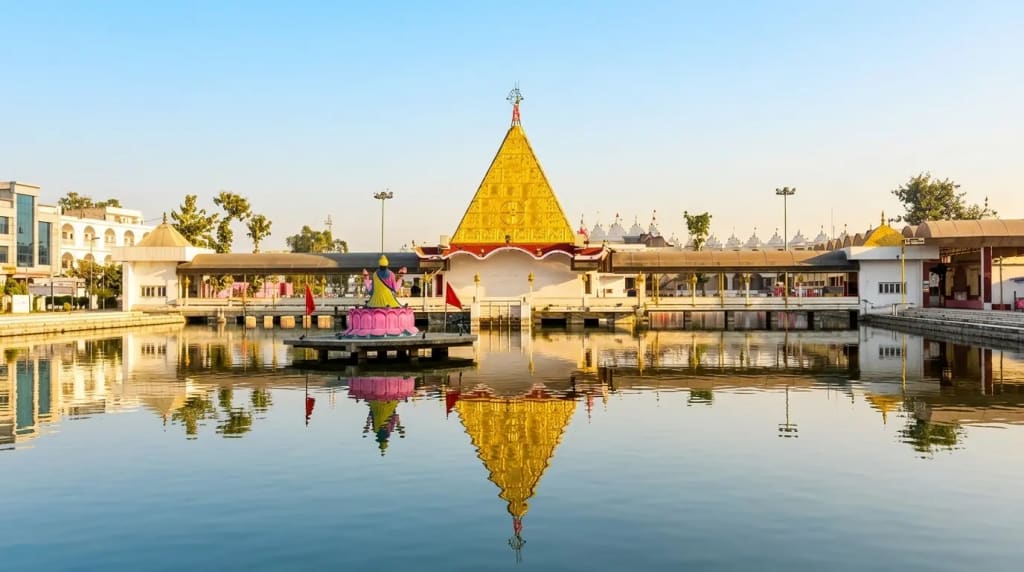
The Jalandhar Shakti Peeth (famously known as the Devi Talab Mandir), located in the bustling heart of Jalandhar city in Punjab, is one of the most spiritually powerful and culturally vibrant shrines in Northern India. Situated in a beautifully landscaped complex centered around a highly sacred, ancient pond, this historic temple is celebrated as one of the prominent 51 Shakti Peethas. Representing the left breast of Goddess Sati, the temple stands as a monumental symbol of maternal nourishment, cosmic preservation, and absolute purification, drawing millions of pilgrims every year.
🌸 Jalandhar Temple: Quick Facts & Overview
| Information | Details |
|---|---|
| Temple Name | Jalandhar Shakti Peeth (Devi Talab Mandir) |
| Location | Jalandhar City, Punjab, India |
| Temple Timings | 5:00 AM to 10:00 PM |
| Best Time to Visit | October to March (pleasant winter weather and Harballabh Sangeet Sammelan) |
| Nearest Airport | Sri Guru Ram Dass Jee International Airport, Amritsar |
| Nearest Railway Station | Jalandhar City Railway Station |
| State | Punjab |
| Famous For | Left Breast of Goddess Sati (Stana Peeth), 200-year-old sacred pond, Harballabh Sangeet Sammelan |
🏛️ Overview
The Jalandhar Shakti Peeth is a spectacular, golden-plated temple structured inside a vast, historic pond complex. Dedicated to Goddess Parvati in her fierce yet highly protective form as Maa Tripuramalini (the goddess adorned with the garland of the three worlds), the temple represents a marvelous blend of classical Hindu architecture and modern, highly accessible design. Located in the fertile plains of Punjab, this sacred sanctuary offers a deeply peaceful, vibrant, and emotionally healing spiritual environment, preserved beautifully by the temple management and local communities.
📜 About Jalandhar Shakti Peeth
According to ancient scriptures, the Devi Bhagavata Purana and the Shakti Peetha Stotram, Jalandhar is recognized as a premier seat of cosmic energy. The legend states that when Lord Vishnu severed the lifeless body of Goddess Sati with his Sudarshana Chakra to stop the cosmic dance of destruction (Tandava) of Lord Shiva, her left breast (Stana) fell at this precise location in Punjab.
In this holy Peeth, the divine mother is worshipped in her cosmic form as Goddess Tripuramalini (representing the absolute controller of the physical, mental, and spiritual realms) and her consort, Lord Shiva, is worshipped nearby as Lord Bhishan (representing the terrifying, protector deity of the valley). The left breast represents maternal nourishment, divine grace, and the flow of life-supporting cosmic milk. Worshipping here is believed to heal deep physical and mental ailments, bless mothers with healthy children, and fill the devotee’s heart with maternal love and absolute peace.
⏳ Temple History
The historical roots of the Jalandhar Shakti Peeth are deeply ancient, with classical mentions in multiple historical chronicles detailing the sacred geography of Punjab and the lower Himalayas. For centuries, this historic pond served as a quiet, rural sanctuary where wandering saints, Kapalika practitioners, and Himalayan ascetics performed intense meditation.
The modern temple structure and the surrounding masonry over the historical pond were developed approximately 200 years ago under the spiritual guidance of local saints and Hindu rulers of Punjab. The temple features a stunning, golden-plated dome resembling the famous Amarnath Cave shrine’s structures. Despite the political and geographical shifts of the partition era, the local community has continuously worked to expand the complex. Today, it stands as a majestic symbol of communal harmony, welcoming spiritual seekers of all faiths and backgrounds.
✨ Spiritual Significance
Goddess Tripuramalini represents the ultimate nurturing power of divine light, absolute physical protection, and the removal of worldly illusions.
The temple is especially visited by devotees seeking:
- The Healing Waters of Devi Talab: The central, massive sacred water tank (Talab) is believed to be over 200 years old. Devotees believe that taking a holy dip in these pristine waters has profound therapeutic properties, curing chronic physical disorders and purifying the inner mind.
- The Amarnath Cave Replica: Within the temple complex, a highly creative, life-sized replica of the Amarnath Cave has been constructed. Devotees can walk through a cool, stone-paved tunnel to view the ice-like formations of Lord Shiva and Maa Parvati, making it highly popular for families.
- The Harballabh Sangeet Sammelan: Held annually in December within the temple complex, this is the oldest Hindustani classical music festival in the world. Initiated in 1875 by Saint Harballabh, legendary musicians from across India gather here to perform vocal and instrumental classical ragas as a divine musical offering to Maa Tripuramalini.
⏰ Darshan Timings & Rituals
Temple Timings
The temple operates on a highly structured schedule to allow for the continuous performance of sacred decorative and food offering rituals:
- Daily Darshan: 5:00 AM to 10:00 PM
- Best View Hours: It is highly recommended to complete your visit between 7:00 AM and 7:00 PM to fully enjoy the scenic beauty of the pond during daylight hours.
Major Rituals
- Pratah Puja & Aarti: Performed daily at 5:30 AM to open the temple doors with beautiful Vedic chants and traditional musical instruments.
- Maha Bhog: Offered daily at 12:00 Noon, featuring traditional Punjabi sweet semolina (Halwa), chickpeas (Chana), and rice, during which the gates are closed briefly for 30 minutes.
- Sandhya Aarti: A deeply spiritual and atmospheric evening prayer held at sunset (around 7:00 PM), where traditional camphor and ghee lamps are lit, reflecting beautifully over the waters of the pond.
🚶 How to Reach Jalandhar Temple
Jalandhar is a major industrial and cultural hub, making it highly accessible by road, rail, and air.
By Train
- Nearest Major Rail Hub: Jalandhar City Railway Station (JUC), located just 3 km from the temple. It is highly connected to New Delhi, Amritsar, Jammu, and Mumbai via daily superfast trains. Direct auto-rickshaws and local taxis are readily available outside the station.
By Road
- From Amritsar: Approximately 80 km away via the smooth, multi-lane National Highway 44 (approx. 1.5 hours drive).
- From Chandigarh: Approximately 145 km away via the highway (approx. 3 hours drive).
- From New Delhi: Approximately 370 km away via NH-44 (approx. 6.5 hours drive). Regular deluxe AC state and private buses operate daily from Delhi to the Jwalamukhi bus stand in Jalandhar.
By Air
- Nearest Airport: Sri Guru Ram Dass Jee International Airport (ATQ) in Amritsar, located approximately 95 km away. From the airport, you can comfortably hire a direct private taxi or board a train to Jalandhar.
🗺️ Nearby Places to Visit
- Rangla Punjab Haveli: A highly popular cultural village resort located 12 km away, offering a spectacular glimpse into traditional Punjabi village life, local crafts, and cuisine.
- Wonderland Theme Park: A beautiful, massive water and amusement park located 9 km away, perfect for a fun afternoon with family.
- Sodal Mandir: An ancient, highly sacred temple in Jalandhar dedicated to Child Deity Baba Sodal, located just 2 km away from Devi Talab.
- Jang-e-Azadi Memorial: A magnificent, world-class museum complex located 15 km away, showcasing the glorious history of the freedom struggle of Punjab.
💡 Travel Tips
- Exact Focus Keyword for Rank Math: When publishing this post, ensure you set the Focus Keyword exactly as
Jalandhar Shakti Peeth. - Participate in December Music Festival: If you love classical music, plan your visit in late December to experience the legendary Harballabh Sangeet Sammelan, which is free and open to all.
- Keep the Pond Clean: Do not throw plastic bags, food items, or paper into the sacred talab. Maintain the environmental and spiritual sanctity of the temple waters.
- Dress Modestly: Dress in highly conservative, comfortable, and respectful traditional clothing. Wear comfortable walking shoes, as you will need to walk around the extensive pond perimeter.
❓ FAQs
Why is Jalandhar Shakti Peeth famous?
Jalandhar Shakti Peeth is famous as one of the 51 sacred Shakti Peethas, marking the precise spot where the left breast of Goddess Sati fell, and is globally renowned for its ancient pond temple and the historic Harballabh Sangeet Sammelan.
Which body part of Goddess Sati fell at Jalandhar?
According to ancient scriptures, the left breast (Stana) of Goddess Sati fell at this precise location in Jalandhar, Punjab.
Who is the Bhairav of Jalandhar Shakti Peeth?
The Bhairav associated with the Jalandhar Shakti Peeth is Lord Bhishan, a highly protective and powerful manifestation of Lord Shiva.
Is there an entry fee to visit the Devi Talab Mandir?
No, entry to the main temple complex, the Amarnath Cave replica, and all surrounding shrines is completely free of charge for all devotees.
How far is the temple from Amritsar?
The temple is located approximately 80 km from Amritsar and can be easily reached in about 1.5 hours of driving via the smooth National Highway 44.


