

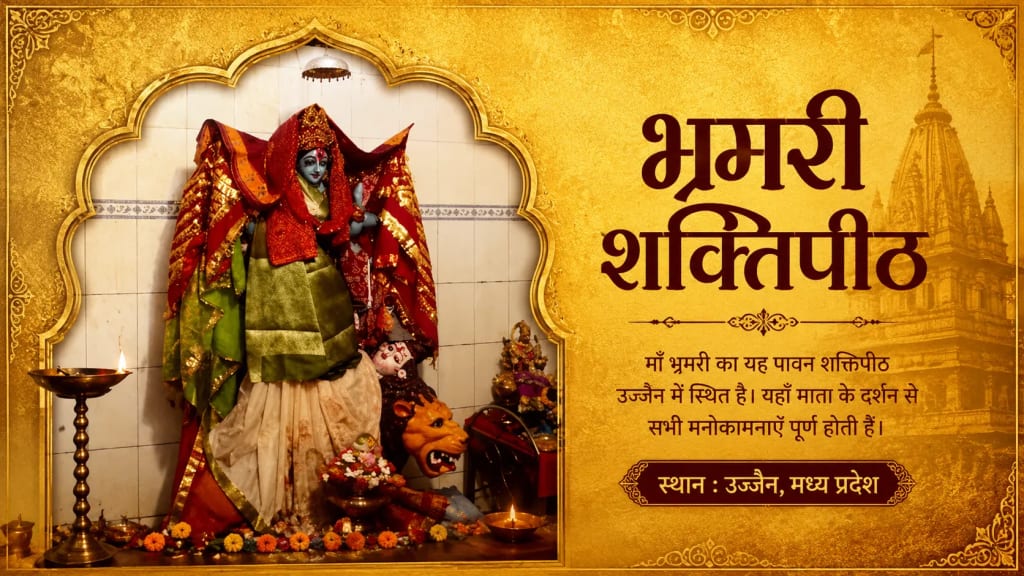
Bhramari Shakti Peeth, peacefully located on the scenic banks of the Teesta River in Bodaganj, West Bengal, is a highly revered pilgrimage site marking the spot where Goddess Sati’s left foot (Vama Pada) fell. Nestled along the edges of the historic Baikunthapur Forest, this sacred energetic node is dedicated to Goddess Bhramari—the fierce, bee-manifesting protector of the universe—and guarded by her divine consort, Lord Shiva as Ishwara. As one of the prominent Shakti Peethas in Eastern India, the temple serves as a powerful spiritual anchor, offering deep quietude and cosmic healing to those traversing the North Bengal plains.
🏛️ Overview of the Holy Landscape
The shrine of Goddess Bhramari features a simple yet elegant single-story red structure, reflecting the traditional regional aesthetic of North Bengal’s sacred spaces. Surrounded by the dense, natural greenery of the adjacent forest, the temple grounds offer an incredibly tranquil, moisture-rich atmosphere where the gentle rustle of leaves harmonizes with local prayers. A massive, beautiful statue of Lord Shiva guards the entrance, setting a deeply meditative tone for arriving pilgrims.
📜 The Sacred Legend of Sati’s Left Foot & Goddess Bhramari
According to ancient Puranic scriptures, when Lord Vishnu divided Goddess Sati’s body to alleviate Shiva’s devastating cosmic grief, her left foot fell at this riverfront site. In spiritual anatomy, the feet represent grounding, forward progression, and the foundation of path-working, rendering the Peeth an essential center for finding direction in life. The Devi resides here as Bhramari, the “Goddess of Bumblebees,” who once took the form of a giant bee to unleash a swarm that destroyed the tyrant demon Arunasura, while Ishwara guards the holy space to preserve absolute cosmic order.
⏳ Temple History & Monastic Legacy
The history of the Bodaganj region is deeply rooted in local forest lore and historical traditions of North Bengal. Regional folklore associates the surrounding Baikunthapur woods with the famous historical figures Devi Choudhurani (the legendary rebel dacoit queen) and her spiritual mentor Bhavani Pathak, who prayed at this site to find strength during their early anti-colonial struggles. Maintained across generations by local priestly lineages and forest-dwelling communities, the shrine has preserved its daily Vedic rituals and Tantric rites completely intact.
✨ Spiritual Significance & Unique Blessings
- Heart Chakra of Healing: Revered as the spiritual heart chakra of the Goddess, the site’s unique vibrations are believed by devotees to harbor profound properties that cleanse the mind and heal physical elements.
- Overcoming Obstacles: Praying to Goddess Bhramari is believed to shield devotees from external negativity, toxic influences, and mental confusion.
- Kundalini Awakenings: The secluded forest and river setting make this a premier node for sadhakas looking to engage in advanced meditation and spiritual energy alignment.
⏰ Darshan Timings & Daily Rituals
- Public Darshan: Open daily from 06:00 AM to 08:00 PM.
- Nitya Puja: 12:00 PM. A quiet daily ritual offering of traditional cooked bhog and fresh local fruits.
- Sandhya Aarti: 06:30 PM. An enchanting evening lamp offering accompanied by rhythmic bells and traditional dhak drumming.
🚶 How to Reach Bhramari Temple
The temple is situated in Bodaganj, Jalpaiguri district, and is highly accessible:
- By Road: Readily connected to Jalpaiguri (approx. 20 km away) and Siliguri (approx. 38 km away); local cabs and private vehicles are easily available.
- By Train: The nearest major railheads are Jalpaiguri Junction (20 km) and New Jalpaiguri (NJP) (31 km).
- By Air: Bagdogra International Airport (IXB) is the nearest airport, located approximately 47 km from the temple grounds.
🗺️ Nearby Places to Visit
- Teesta Barrage (Gazoldoba): A stunning, expansive wetland sanctuary near the river, world-renowned as a haven for colorful migratory birds.
- Baikunthapur Forest: The mythological, lush green forest ecosystem directly adjacent to the temple, perfect for nature enthusiasts.
- Devi Chaudhurani Temple: A historic regional temple celebrating the rich folklore and local heritage of the area.
💡 Essential Travel Tips
- Plan Around the Focus Keyword: Set aside a few quiet hours to sit within the peaceful courtyard of the Bhramari Shakti Peeth to absorb its natural, high-vibrational energetic presence.
- Respect Local Practices: Devotees who wish to perform puja or attend the morning aarti are traditionally expected to bathe and wear clean, modest clothing.
- Best Season to Visit: The cooler autumn and winter months (October to March) offer the most comfortable weather for exploring the regional forests and riverbanks.
❓ FAQs
Why is Bhramari Shakti Peeth famous?
It is highly celebrated as the sacred ground where Goddess Sati’s left foot fell, housing the peaceful, forest-bordered shrine of Goddess Bhramari and Lord Ishwara.
Which body part of Goddess Sati fell here?
Her left foot (Vama Pada), representing structural stability, physical grounding, and life’s spiritual direction.
Who is the Bhairav at this Peeth?
Lord Shiva is worshipped here as Ishwara, the protective and absolute guardian of the Teesta River basin.
What are the photography rules inside the temple?
While taking pictures of the scenic exterior grounds is allowed, photography inside the inner sanctum is strictly prohibited.


