

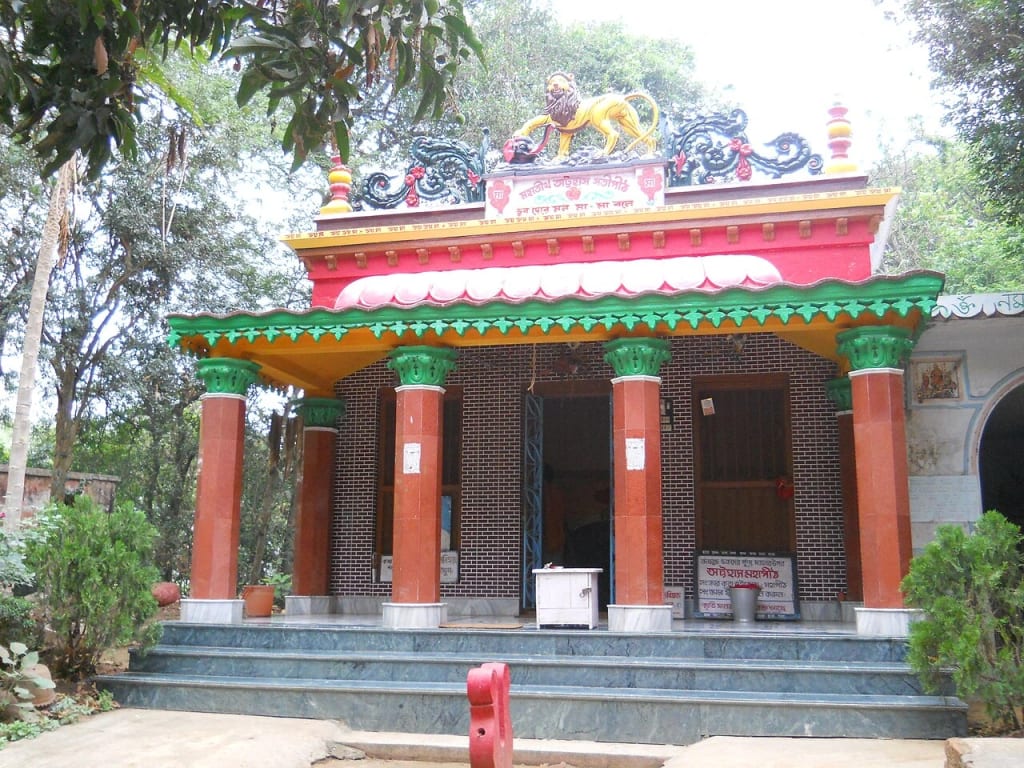
The Attahasa Shakti Peeth (popularly known as the Phullara Devi Temple or Fullaratala), situated on the tranquil outskirts of the historic town of Labhpur in the Birbhum district of West Bengal, is one of the most spiritually profound, ancient, and tranquil shrines in India. Located in the famous “land of red soil” (Rarh Bengal), this sacred temple is celebrated as one of the prominent 51 sacred Shakti Peethas. Marking the divine spot where the lower lip of Goddess Sati is believed to have fallen, the temple stands as a monumental symbol of cosmic laughter, emotional resilience, and deep vocal clarity, drawing thousands of spiritual seekers, saints, and pilgrims every year.
🌸 Attahasa Temple: Quick Facts & Overview
| Information | Details |
|---|---|
| Temple Name | Attahasa Shakti Peeth (Phullara Devi Temple / Fullaratala) |
| Location | Labhpur Town, Bolpur Subdivision, Birbhum District, West Bengal |
| Temple Timings | 6:00 AM to 10:00 PM |
| Best Time to Visit | October to March (during pleasant winter months and Magh Purnima) |
| Nearest Airport | Netaji Subhas Chandra Bose International Airport, Kolkata (approx. 195 km away) |
| Nearest Railway Station | Ahmedpur Junction Railway Station (approx. 12 km) | Bolpur Shantiniketan (approx. 30 km) |
| State | West Bengal |
| Famous For | Lower Lip of Goddess Sati (Adhara Peeth), 15-foot wide sacred lip stone, the legend of Hanuman’s 108 blue lotuses |
🏛️ Overview
The Attahasa Shakti Peeth features an incredibly peaceful, brick-walled temple built in traditional Bengali architectural style, characterized by a clean octagonal roofed sanctum sitting in the center of a spacious, paved compound. Dedicated to Goddess Parvati in her gentle, blossoming manifestation as Maa Phullara (meaning “flowering” or “blooming”), the temple is surrounded by massive ancient trees, wild forest foliage, and a sacred, lotus-filled natural pond. Unlike heavily commercialized city shrines, this secluded rural sanctuary has a deeply quiet, rustic charm where pilgrims can sit in total silence, listening to the soft whispering of leaves and experiencing a profound sense of inner still.
📜 About Attahasa Shakti Peeth
According to ancient scriptures, including the Devi Bhagavata Purana and the Tantra Chudamani, the holy geography of Birbhum is recognized as an extraordinary concentration of divine energy, housing five unique Shakti Peethas. The legend states that when Lord Vishnu severed the lifeless body of Goddess Sati with his Sudarshana Chakra to stop the cosmic dance of destruction (Tandava) of Lord Shiva, her lower lip (Adhara) fell at this precise location near the ancient Ishani River valley.
In this holy Peeth, the divine mother is worshipped as Maa Phullara (representing the ever-blooming, beautiful essence of the cosmos) and her consort, Lord Shiva, is worshipped nearby at his independent shrine as Lord Viswesh (or Vishvesha, representing the supreme Lord of the Universe).
The name Attahasa is derived from the Sanskrit words Atta (extreme/loud) and Hasa (laughter), translating to a “burst of loud laughter.” In spiritual lore, it is believed that when Sati’s lower lip touched the earth at this spot, a powerful burst of cosmic, protective laughter echoed throughout the universe, dissolving dark forces and establishing an eternal frequency of joy. Worshipping here is believed to clear heavy throat blocks, bless the seeker with confident and beautiful speech, and fill the mind with immense willpower and spiritual clarity.
⏳ Temple History
The historical roots of the Attahasa Shakti Peeth are deeply ancient, with records suggesting that a holy spot of worship has existed on this plain for over a thousand years. Classical references to the sacred “Kshirika” and “Attahas” passes are found in multiple ancient Tantras, where it was recognized as a premier seat for Tantric ascetics and Kapalika practitioners performing intense breathing and sound penances.
According to local regional chronicles, for centuries, the Goddess was worshipped under the open shade of sacred trees. The modern structured temple was built around 1901 to 1902 under the spiritual guidance and financial patronage of a local landlord named Yadavlal Bandyopadhyay.
The temple is also deeply associated with the great saint Krishnananda Giri, who traveled from Kashi, rediscovered the hidden seat, and restarted elaborate Vedic worship. Despite the passage of centuries, the simple brick structure has been lovingly preserved by the local trust and the regional community. It stands today as a majestic symbol of uncommercialized faith and authentic Bengali spiritual heritage.
✨ Spiritual Significance
Goddess Phullara represents the ultimate power of spiritual intellect, pure maternal dedication, and the absolute destruction of internal anxiety.
The temple is especially visited by devotees seeking:
- The Formless Lip Stone: Inside the inner sanctum (Garbhagriha), there is no conventional clay or metal idol of the Goddess. Instead, devotees offer prayers directly to a massive, self-manifested black stone that naturally resembles a lower lip, measuring nearly 15 feet in width. The stone is lovingly smeared with fresh red vermilion and sandalwood paste, honoring the natural simplicity of the Divine Mother.
- The Custom of Sour Offerings: A unique and strict tradition at this temple requires that whenever Maha Bhog (food offering) is offered to the Goddess, it must include a sour preparation (Tok or sour chutney). Devotees believe that offering sour fruits or yogurt here helps in balancing metabolic energies and clearing speech-related blockages.
- Hanuman’s Blue Lotus Pond: Immediately adjacent to the temple lies a historic, beautiful pond. According to local Treta Yuga legends, when Lord Rama was preparing to perform the Akal Bodhan (Durga Puja) before his battle with Ravana, he required 108 rare blue lotuses (Neel Kamal). Lord Hanuman traveled across the earth and successfully collected the 108 blue lotuses from this exact pond in Labhpur, making the waters of this tank highly sacred.
⏰ Darshan Timings & Rituals
Temple Timings
The temple operates on a simple, daylight-aligned schedule to ensure the absolute safety and comfort of visiting pilgrims:
- Daily Darshan: 6:00 AM to 10:00 PM
(Note: The main gates are closed briefly for afternoon rest and Bhog offering from 12:30 PM to 2:00 PM. During special festivals like Chaitra Navratri, Sharad Navratri, and Kali Puja, the temple remains open continuously for extended hours).
Major Rituals
- Pratah Shringar & Aarti: Performed daily at 6:30 AM, where the sacred lip stone is washed with holy waters, fresh vermilion is applied, and ghee lamps are waved with the blowing of traditional conch shells.
- Maha Naivedya Bhog: Offered daily at 12:00 Noon, featuring traditional cooked rice, lentils, local vegetable curries, and the mandatory sour chutney (Tok).
- Sandhya Aarti: A deeply spiritual and atmospheric evening prayer held at sunset (around 6:30 PM), where hundreds of oil lamps are lit, reflecting beautifully against the red brick walls.
🚶 How to Reach Attahasa Temple
The temple is located in the quiet town of Labhpur within the Birbhum district and is highly accessible by road and rail networks.
By Train
- Nearest Major Station: Ahmedpur Junction Railway Station is located approximately 12 km from the temple. It is highly connected to Kolkata (Howrah and Sealdah) via daily superfast trains.
- Alternative Station: Bolpur Shantiniketan Railway Station is located approximately 30 km away.
- Direct local auto-rickshaws, shared electric cabs (Totos), and private taxis are readily available outside both station exit gates to take you to the temple base in under 30 minutes.
By Road
- From Bolpur (Shantiniketan): Located approximately 30 km north. You can easily hire a direct taxi or board local buses to reach Labhpur in under 45 minutes.
- From Kolkata: Approximately 195 km north via the smooth National Highway 12. The drive is highly scenic, passing through the green plains of Burdwan, and takes about 5 hours. Regular deluxe buses run daily from Esplanade (Kolkata) to Labhpur.
By Air
- Nearest Airport: Netaji Subhas Chandra Bose International Airport (CCU) in Kolkata, located approximately 195 km from the temple. From the airport, you can comfortably hire a direct private taxi or catch a superfast train from Howrah to Ahmedpur.
🗺️ Nearby Places to Visit
- Kankalitala Shaktipeeth: Another highly sacred, legendary Shakti Peeth representing the waist of Goddess Sati, located just 26 km away along the scenic banks of the Kopai River.
- Shantiniketan: The world-famous cultural and educational town founded by Nobel Laureate Rabindranath Tagore, located 30 km away, perfect for exploring local arts, crafts, and heritage.
- Tarapith: The world-famous Tantric temple town dedicated to Maa Tara, located 46 km north of the temple, making it easy to plan a combined multi-day pilgrimage.
- Tarashankar Bandopadhyay Museum: Located in the heart of Labhpur town, this is the historic, preserved birthplace of the legendary Bengali novelist Tarashankar Bandopadhyay, who immortalized this region in his literature.
💡 Travel Tips
- Exact Focus Keyword for Rank Math: When publishing this post, ensure you set the Focus Keyword exactly as
Attahasa Shakti Peeth. - Participate in the Magh Purnima Fair: If you want to experience the rich cultural heritage of Rarh Bengal, plan your visit during the Bengali month of Magh (late January or February). A grand 10-day local fair called the Phullora Mela is organized, attracting thousands of folk singers and local artisans.
- Carry Cash: Since Labhpur is a quiet rural town, local flower vendors, sweet sellers (Peda shops), and shared Totos do not accept international cards or digital bank transfers. Carry sufficient physical cash.
- Dress Modestly: Wear conservative, comfortable, and respectful traditional clothing. Sarees, salwar suits, and traditional kurtas with trousers are highly recommended.
❓ FAQs
Why is Attahasa Shakti Peeth famous?
Attahasa Shakti Peeth is famous as one of the 51 sacred Shakti Peethas, marking the precise spot where Goddess Sati’s lower lip fell, and is globally unique for its 15-foot wide natural stone lip representation and its holy blue lotus pond.
Which body part of Goddess Sati fell at Labhpur?
According to ancient scriptures, the lower lip (Adhara) of Goddess Sati fell at the spot where the Attahasa Shakti Peeth stands in Labhpur, West Bengal.
Who is the Bhairav of Attahasa Shakti Peeth?
The Bhairav associated with the Attahasa Shakti Peeth is Lord Viswesh (or Vishvesha), a highly protective form of Lord Shiva whose dedicated shrine sits right next to the main temple.
Can we visit the temple during the monsoon?
Yes, the temple is open year-round. However, since the region receives heavy rainfall, carrying an umbrella is highly recommended if visiting during the rainy months (June to September).
What is the significance of the “Attahasa” name?
The name “Attahasa” comes from the Sanskrit words for “extreme loud laughter,” referencing the divine, powerful burst of laughter that erupted from the Goddess when her lower lip touched the earth at this location.


