

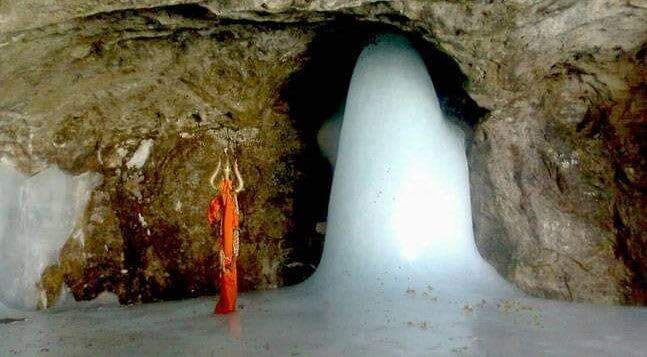
Mahamaya Shakti Peeth (Amarnath), Pahalgam, Jammu & Kashmir (महामाया शक्तिपीठ (अमरनाथ), पहलगाम, जम्मू-कश्मीर)
The Mahamaya Shakti Peeth Amarnath (celebrated globally as the holy Amarnath Cave shrine), located near the scenic town of Pahalgam in the Anantnag district of Jammu and Kashmir, is one of the most spiritually powerful, challenging, and awe-inspiring high-altitude shrines in the world. Tucked away in the snow-clad, majestic peaks of the Himalayas, this sacred cave is revered as one of the prominent 51 Shakti Peethas. Representing the throat of Goddess Sati, the temple stands as a monumental symbol of cosmic voice, purification, and the eternal union of Shiva and Shakti, attracting hundreds of thousands of determined pilgrims every year.
🌸 Mahamaya Temple: Quick Facts & Overview
| Information | Details |
|---|---|
| Temple Name | Mahamaya Shakti Peeth (Amarnath Cave Shrine) |
| Location | Near Pahalgam, Anantnag District, Jammu & Kashmir |
| Temple Timings | Open only during the annual July–August Yatra season (6:00 AM to 5:00 PM) |
| Best Time to Visit | Shravan Month (July to August during the official SASB Yatra) |
| Nearest Airport | Srinagar International Airport |
| Nearest Railway Station | Jammu Tawi Railway Station |
| State / Union Territory | Jammu and Kashmir |
| Famous For | Throat of Goddess Sati (Kanth Peeth), naturally frozen Ice Lingam |
🏛️ Overview
The Mahamaya Shakti Peeth Amarnath is a legendary natural limestone cave situated amidst massive glaciers, steep rocky cliffs, and rushing mountain streams. Dedicated to Goddess Parvati in her form as Maa Mahamaya, the shrine features a unique, self-manifesting ice stalagmite representing the Goddess, placed alongside the world-famous ice Shivalinga. Because of its extreme high-altitude location, the cave is only accessible to human beings during the brief summer months, offering a deeply mystical, challenging, and highly transformative spiritual penance for every devotee.
📜 About Mahamaya Shakti Peeth
According to ancient scriptures, the Devi Bhagavata Purana and the Shakti Peetha Stotram, the Amarnath Cave is recognized as a supreme center of cosmic energy. The legend states that when Lord Vishnu severed the lifeless body of Goddess Sati with his Sudarshana Chakra to stop the cosmic dance of destruction (Tandava) of Lord Shiva, her throat (Kanth) fell at this precise glacier location near Pahalgam.
In this holy Peeth, the divine mother is worshipped as Maa Mahamaya (representing the great cosmic illusion and creative power) and her consort, Lord Shiva, is worshipped nearby as Lord Trisandhyeshwar (representing the Lord of the three times of prayer: dawn, noon, and dusk). The throat represents the Vishuddha Chakra, the center of absolute purification, sound, and spiritual expression. Worshipping here is believed to purify the devotee’s voice, wash away heavy past life sins, and grant immediate spiritual liberation (Moksha).
⏳ Temple History
The historical roots of the Mahamaya Shakti Peeth are deeply ancient, with classical mentions in Kalhana’s 12th-century historical chronicle, Rajatarangini, and the ancient Nilamata Purana detailing the sacred geography of Kashmir. For centuries, this remote, snow-clad cavern remained a quiet, frozen sanctuary where great Himalayan yogis performed intense breathing and meditation rituals.
According to local historical accounts, the modern awareness of the cave was revived by a local shepherd named Buta Malik in the 15th century. Legend states that a mystic saint gave Buta Malik a bag of charcoal, which miraculously turned into pure gold when he reached home. When he returned to thank the saint, he discovered the magnificent, ice-filled cave instead. Since then, the cave has been managed as a symbol of deep communal harmony, with both local Kashmiri communities and national Hindu organizations working hand-in-hand to preserve this highly respected monument of faith.
✨ Spiritual Significance
Goddess Mahamaya represents the ultimate power of divine vision, absolute spiritual purification, and the dissolution of worldly illusions.
The temple is especially visited by devotees seeking:
- The Miracle of the Ice Formations: Inside the cave, water droplets slowly seep through the limestone ceiling, freezing upon contact with the floor to form distinct ice stalagmites. The largest represents Lord Shiva, which naturally waxes and wanes with the phases of the moon, reaching its full size on the Shravan Purnima. To its left stands the smaller, highly revered ice stalagmite representing Maa Mahamaya.
- The Legend of the Amar Katha: This cave is the legendary spot where Lord Shiva revealed the secrets of immortality (Amar Katha) to Goddess Parvati. To ensure absolute secrecy, Lord Shiva left behind all his worldly companions on the trail—his bull Nandi at Pahalgam, the moon at Chandanwari, his serpents at Sheshnag, and his son Ganesha at Mahagunas Hill—making this entire route highly sacred.
- The Witness Pigeons: Devotees believe that a pair of mating pigeons overheard the Amar Katha during Shiva’s narration, becoming immortal. Lucky pilgrims still report seeing these white pigeons nesting high up in the cold rock crevices of the cave.
⏰ Darshan Timings & Yatra Schedule
Because of its extreme weather conditions and high altitude, the temple is not accessible year-round and operates on a highly structured, government-managed schedule:
- Yatra Duration: The pilgrimage is organized annually for approximately 45 to 60 days, starting in late June or early July and concluding on the full moon day of Raksha Bandhan (Shravan Purnima) in August.
- Daily Darshan Hours: 6:00 AM to 5:00 PM. No pilgrims are allowed to stay near the holy cave after sunset for safety reasons.
🚶 How to Reach Mahamaya Temple
Pilgrims can reach the holy cave via two primary mountain trails managed by the Shri Amarnathji Shrine Board (SASB):
1. The Traditional Pahalgam Route (Scenic & Gradual)
- The Trail: Pahalgam to Chandanwari, Pissu Top, Sheshnag, Panchtarni, and finally the Holy Cave.
- Distance: Approximately 43 to 48 km of mountain trekking, usually completed in 3 to 4 days on foot, ponies, or palanquins.
- Advantage: The climb is gradual, which helps the physical body naturally acclimatize to the thin mountain air, significantly reducing the risk of high-altitude sickness.
2. The Baltal Route (Short, Steep & Swift)
- The Trail: Baltal to Domail, Barari Marg, Sangam, and the Holy Cave.
- Distance: Approximately 14 km of steep, narrow climbing, which physically fit hikers can complete in a single day.
🚁 Helicopter Services
For senior citizens, families, and differently-abled travelers, helicopter services operate daily during the yatra season from both Pahalgam and Baltal to Panchtarni. From Panchtarni, the holy cave is a gentle 6 km walk.
🗺️ Nearby Places to Visit
- Pahalgam (Bail Gaon): A breathtakingly beautiful valley town famous for its lush pine forests, rushing Lidder River, and scenic meadows.
- Sheshnag Lake: A spectacular, high-altitude alpine lake surrounded by snow-covered peaks, situated along the traditional yatra route.
- Chandanwari: The scenic starting point of the Pahalgam yatra route, famous for its majestic snow bridges.
- Betaab Valley: A gorgeous, world-famous valley located near Pahalgam, known for its lush green pastures and pristine river streams.
💡 Travel Tips
- Exact Focus Keyword for Rank Math: When publishing this post, ensure you set the Focus Keyword exactly as
Mahamaya Shakti Peeth Amarnath. - Mandatory Medical Certificate (CHC): All pilgrims must obtain a Compulsory Health Certificate signed by an authorized government doctor before registering online.
- Pack Heavy Woolens: The weather near the cave is highly unpredictable and can drop to sub-zero temperatures instantly. Carry high-quality waterproof jackets, thermal inners, gloves, and sturdy trekking shoes.
- Age Restrictions: Children under the age of 13 and senior citizens above 75 are strictly advised not to undertake this strenuous high-altitude trek.
❓ FAQs
Why is Mahamaya Temple Amarnath famous?
The Mahamaya Temple is famous as one of the 51 sacred Shakti Peethas, marking the precise spot where Sati’s throat fell, and is globally revered for the self-manifesting ice stalagmites of Lord Shiva and Maa Mahamaya.
Which body part of Goddess Sati fell at Amarnath?
According to ancient scriptures, the throat (Kanth) of Goddess Sati fell at the spot where the Mahamaya Shakti Peeth stands inside the Amarnath Cave.
Who is the Bhairav of Mahamaya Shakti Peeth?
The Bhairav associated with the Mahamaya Shakti Peeth is Lord Trisandhyeshwar, a highly protective and powerful manifestation of Lord Shiva.
Can we visit the temple in December?
No, the cave is completely blocked by heavy snow and glaciers during the winter months. It is only accessible during the official, government-managed summer yatra in July and August.
Is photography allowed inside the cave?
While you can take photos of the stunning mountain routes and valleys, photography and video recording of the main ice deities inside the inner cave are strictly prohibited.


