

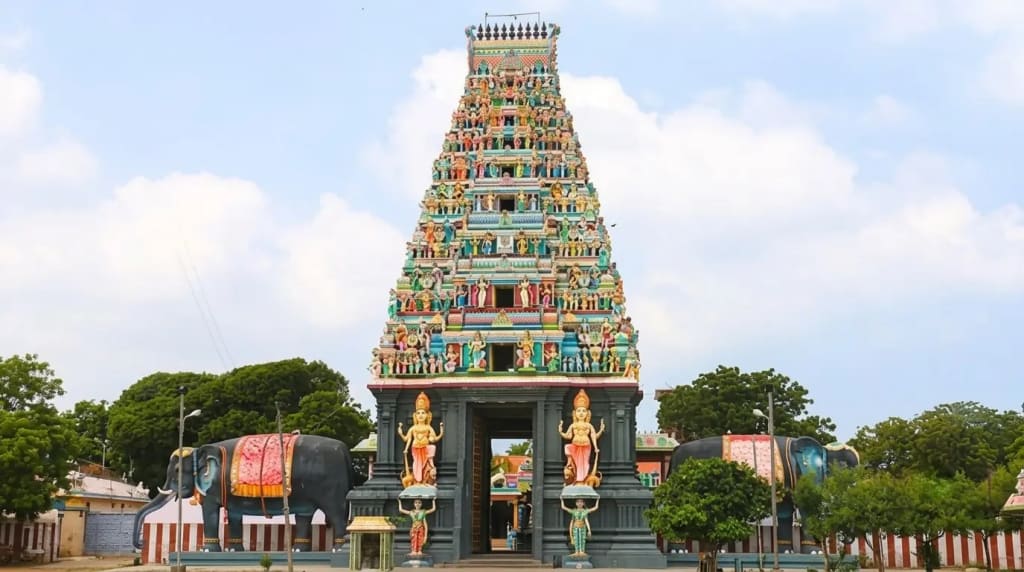
The Lanka Indrakshi Shakti Peeth (celebrated globally as the historic Nainativu Nagapooshani Amman Temple), situated on the sacred island of Nainativu in the Jaffna Peninsula of Sri Lanka, is one of the most spiritually profound, ancient, and geographically unique shrines in South Asia. Nestled gracefully in the sparkling, azure waters of the Palk Strait, this historic sanctuary is celebrated as one of the prominent 51 sacred Shakti Peethas.
Representing the anklet (Silambu or Nupur) of Goddess Sati, the temple stands as a monumental symbol of cosmic dance, absolute maternal protection, and divine grace, drawing millions of pilgrims and travelers from across the globe every year.
🌸 Lanka Indrakshi Shakti Peeth: Quick Facts & Overview
| Information | Details |
|---|---|
| Temple Name | Lanka Indrakshi Shakti Peeth (Nainativu Nagapooshani Amman Temple) |
| Location | Nainativu Island, Jaffna District, Northern Province, Sri Lanka |
| Coordinates | $9.6190^\circ \text{N}, 79.7742^\circ \text{E}$ |
| Temple Timings | 6:00 AM to 1:30 PM and 4:30 PM to 6:00 PM |
| Best Time to Visit | June to July (during the spectacular 16-day annual Mahostavam/Chariot festival) or pleasant winter months (October to March) |
| Nearest Airport | Jaffna International Airport, Palaly (approx. 50 km to Kurikadduwan Jetty) |
| Nearest Railway Station | Jaffna Railway Station (approx. 36 km away from Kurikadduwan Jetty) |
| Country | Sri Lanka |
| Famous For | Sati’s Anklet (Nupur Peeth), unique island ferry approach, worship of the sacred multi-headed silver serpent cobra, 108-foot Rajaraja Gopuram |
🏛️ Overview of the Holy Landscape
The Lanka Indrakshi Shakti Peeth features a spectacular, traditional Dravidian architectural design, showcasing highly colorful and intricately carved entry towers (Gopurams), soaring stone-pillared halls (Mandapams), and a grand golden-plated dome over the inner sanctum. The eastern entrance features the magnificent, newly constructed Raja Raja Gopuram, soaring proudly at a height of 108 feet.
Dedicated to Goddess Parvati in her highly protective and compassionate manifestation as Maa Indrakshi (locally worshipped as Goddess Nagapooshani, meaning “She who wears snakes as ornaments”), the temple sits beautifully on the small historic island of Nainativu. To reach this serene, ocean-facing sanctuary, pilgrims embark on a unique, scenic local ferry ride across the sea from the mainland of Jaffna. The incredibly peaceful, maritime, and spiritually charged environment of this island complex offers a profound, meditative space where devotees can easily sit and absorb the deep cosmic energy of the Divine Mother.
📜 The Sacred Legend of Sati’s Anklets & Goddess Indrakshi
According to ancient scriptures, including the Devi Bhagavata Purana and the Tantra Chudamani, the holy geography of Northern Sri Lanka (traditionally associated with the ancient Tamil kingdoms) is recognized as an extraordinary concentration of divine energy. The legend states that when Lord Vishnu severed the lifeless body of Goddess Sati with his Sudarshana Chakra to stop the cosmic dance of destruction (Tandava) of Lord Shiva, her anklet (Silambu or Nupur) fell at this precise island location.
In this holy Peeth, the divine mother is worshipped as Maa Indrakshi (representing the pure, protective energy who cured the King of Gods, Indra) and her consort, Lord Shiva, is worshipped nearby as Lord Rakshaseshwara (representing the supreme protector who is named here as Nayinaar, and who was once worshipped even by the Rakshasas).
The name Indrakshi is deeply tied to a celestial legend. According to Puranic accounts, Lord Indra, the King of Heaven, was once cursed with a terrible bodily affliction due to a severe moral transgression. In deep repentance, Indra traveled down to the mortal world, reached this remote, holy island, and performed intense penance. Pleased by his devotion, the Goddess appeared before him, purified his physical body, and cured his affliction. In gratitude, Indra established the temple and named the deity Indrakshi.
Another highly popular local legend tells of two historic serpent kings (Nagas) who fought a fierce war on this island over a sacred gem. The dispute was pacified by Goddess Nagapooshani, who took the serpents under her divine maternal protection, establishing her eternal identity as the ultimate protector against poisons and planetary curses.
⏳ Temple History & Monastic Legacy
The historical roots of the Lanka Indrakshi Shakti Peeth are deeply ancient, with classical mentions found in the ancient Tamil Sangam epics Manimekalai and Kundalakesi, which describe the island as Manipallavam where pilgrims came to worship the sacred footprints. It is also glorified by Sri Adi Shankaracharya in his 8th-century Shakti Peetha Stotram. For centuries, this strategic island served as a major sanctuary where seafaring merchants, international travelers, and wandering ascetics of the Siddhar tradition stopped to pray for safe voyages.
The original structural temple was continuously patronized, expanded, and beautifully decorated under the ancient Tamil Chola and Pandyan rulers. Tragically, in 1620 CE, during the colonial expansion, the Portuguese army systematically plundered and completely destroyed the ancient stone structures of the temple. For over 150 years, the sacred site remained a quiet ruin.
In the late 18th century, a highly dedicated local scholar undertook the monumental task of rebuilding the temple. He traveled extensively, raised funds, and successfully restored the inner sanctum. In recent decades, the local temple trust, alongside the global Tamil diaspora and the Sri Lankan government, has extensively renovated the massive entry gateways and built modern, safe ferry terminals, preserving this glorious heritage for generations to come.
✨ Spiritual Significance & Unique Blessings
Goddess Indrakshi represents the ultimate power of spiritual purification, absolute maternal protection, and the removal of physical and mental toxicities.
The temple is especially visited by devotees seeking:
- The Protection of the Sacred Snake (Nagapooshani): Inside the inner sanctum, there is a magnificent silver-plated idol of the Goddess, shaded beautifully by a giant, multi-headed cobra carving. Worshipping the deity here is believed to act as a powerful shield against all snake bites, neutralize the negative astrological effects of Kala Sarpa Dosha, and clear deep-seated fears.
- Prayers for Children (Santhana Bhagyam): The temple is exceptionally famous for blessing childless couples. Devotees who pray for children traditionally offer a tiny, beautifully crafted silver cradle to the Goddess. They tie a symbolic miniature cradle to the branches of the ancient, sacred Banyan tree in the temple courtyard to seek her maternal grace.
- Ocean Bathing Purification: Taking a holy dip or sprinkling the pristine saltwater of the Palk Strait over the head before entering the main temple gates is considered highly sacred. It is believed to completely wash away negative karma, cure chronic skin ailments, and fill the mind with absolute clarity.
⏰ Darshan Timings & Daily Rituals
The temple operates on a highly structured schedule, carefully aligned with the local mainland ferry timings:
- Daily Darshan: 6:00 AM to 1:30 PM and 4:30 PM to 6:00 PM
(Note: During the highly popular 16-day Mahostavam festival held in June or July, the temple remains open for extended hours, with spectacular color processions and chariot parades that attract over 100,000 pilgrims).
Major Daily Rituals
- Pratah Puja & Abhishekam: Performed daily at 6:30 AM to open the temple doors, featuring the ceremonial bathing of the deity in milk, curd, honey, and sacred waters, accompanied by the blowing of conch shells.
- Bhog Offering: Offered daily at 12:00 Noon, featuring traditional cooked vegetarian rice, local curries, and sweet rice porridge (Payasam), during which the main gates are briefly restricted.
- Sandhya Aarti: A deeply spiritual and atmospheric evening prayer held at sunset (around 5:30 PM), where thousands of oil lamps are lit, reflecting beautifully against the ocean waters of Nainativu.
🚶 How to Reach Lanka Indrakshi Temple
The temple is located on Nainativu Island, which is accessed from the Jaffna Peninsula in Northern Sri Lanka.
By Road & Ferry (Mandatory Route)
- Step 1 (Jaffna to Jetty): From central Jaffna town, travel approximately 36 km southwest via the smooth, scenic causeway road to reach the Kurikadduwan (KKD) Jetty. Regular direct public buses run hourly from the Jaffna central bus stand to KKD Jetty.
- Step 2 (The Ferry Ride): From KKD Jetty, board the local passenger ferry boat operated by the local authorities to cross the sea to Nainativu Island. The ferry ride covers a scenic sea distance and takes about 15 to 20 minutes. The temple is located just a short 2-minute walk from the Nainativu boat pier.
By Train
- Nearest Major Station: Jaffna Railway Station is located in the heart of Jaffna town. It is highly connected to the national capital, Colombo, via the famous, modern Yal Devi express trains, taking about 6 to 7 hours of comfortable travel.
By Air
- Nearest Domestic Airport: Jaffna International Airport, Palaly (JAF), located approximately 50 km from the KKD Jetty. It has regular short-distance flights connecting to Chennai (India) and Colombo.
- Nearest International Airport: Bandaranaike International Airport (CMB) in Colombo, located approximately 400 km away. From Colombo, you can comfortably book a domestic flight to Jaffna, board a train, or hire a private express taxi.
🗺️ Nearby Places to Visit
- Nagadeepa Purana Vihara: A spectacular, highly historic Buddhist temple located just a short walk from the Shakti Peeth, commemorating the legendary spot where Lord Buddha visited the island to settle the dispute between the serpent kings.
- Nallur Kandaswamy Kovil: One of the most famous and architecturally grand Murugan temples in Sri Lanka, located in the heart of Jaffna town.
- Jaffna Fort: A magnificent, massive star-shaped historic coastal fort built by the Portuguese and expanded by the Dutch, located in Jaffna.
- Keerimalai Sacred Water Spring: A historic, beautiful natural freshwater spring located on the coast of Jaffna, believed to carry high therapeutic properties.
💡 Essential Travel Tips
- Exact Focus Keyword for Rank Math: When publishing this post, ensure you set the Focus Keyword exactly as
Lanka Indrakshi Shakti Peeth. - Ferry Safety: The ferry crossing from Kurikadduwan Jetty to the island is highly safe but can be windy. Ensure you wear the life jackets provided by the ferry operators.
- Traditional Dress Code: The temple enforces a strict traditional dress code. Men must remove their upper garments (shirts/t-shirts) before entering the inner sanctum. Women must wear sarees, half-sarees, or salwar kameez with a dupatta. Shorts, sleeveless tops, and short skirts are strictly prohibited.
- Respect the Island Customs: Nainativu is a highly sacred island for both Hindus and Buddhists. Maintain a quiet and respectful demeanor throughout your island stay. Avoid carrying plastic bags openly, and keep the beach areas clean.
- Carry Sri Lankan Rupees (LKR): Since the island is a peaceful local destination, small sweet shops, flower sellers, and local transport operators do not accept international credit cards. Ensure you carry sufficient physical Sri Lankan Rupees (LKR) in cash.
❓ FAQs
Why is Lanka Indrakshi Shakti Peeth famous?
Lanka Indrakshi Shakti Peeth is famous as one of the highly sacred 51 Shakti Peethas, marking the precise spot where Sati’s anklet fell, and is globally celebrated for its unique island ferry journey and its healing powers against poisons and planetary curses.
Which body part of Goddess Sati fell at Sri Lanka?
According to ancient scriptures, the anklet (Silambu or Nupur) of Goddess Sati fell at this precise location on Nainativu Island near Jaffna, Sri Lanka.
Who is the Bhairav of Lanka Indrakshi Shakti Peeth?
The Bhairav associated with the Lanka Indrakshi Shakti Peeth is Lord Rakshaseshwara (also known as Nayinaar or Rakshaseshwar), whose protective presence is worshipped alongside the Goddess.
How do you get to Nainativu Island?
You must travel to the Kurikadduwan (KKD) Jetty from Jaffna by road and then board a 15-to-20-minute local passenger ferry boat to reach Nainativu Island.
Do Indians need a visa to visit Jaffna?
Yes, Indian citizens and international travelers must secure a standard Sri Lankan Electronic Travel Authorization (ETA / Visa) online before landing in Sri Lanka.


