

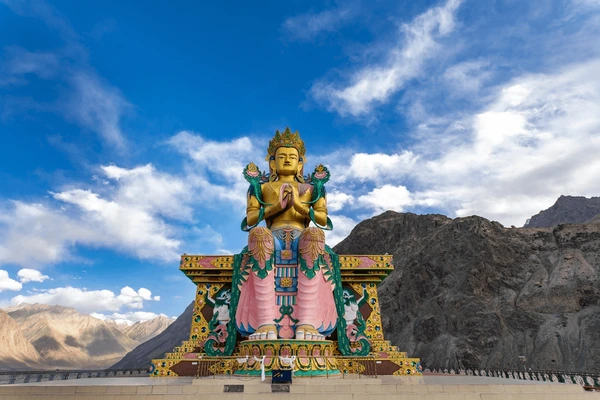
About Diskit Monastery
Diskit Monastery, also called Diskit Gompa, is the oldest and largest Buddhist monastery in the Nubra Valley of Ladakh. It stands on a hill above Diskit village and overlooks the Shyok river and the valley below.
The monastery follows the Gelug tradition and is traditionally dated to the 14th century. It is best known for a 32-metre (106-foot) statue of Maitreya Buddha, which faces the valley and the Shyok river.
Quick Facts
| Information | Details |
|---|---|
| Monastery Name | Diskit Monastery (Diskit Gompa) |
| Location | Diskit, Nubra Valley, Ladakh, India |
| Tradition | Gelug Buddhism |
| Famous For | Maitreya Buddha statue and valley views |
| Altitude | About 3,100 metres |
| Nearest Railway Station | None in Ladakh; nearest railheads are Jammu Tawi and Chandigarh area |
| Nearest Airport | Kushok Bakula Rimpochee Airport, Leh |
| Ideal Duration | 2–3 Hours |
Highlights
- Oldest and largest monastery in Nubra Valley
- 32-metre Maitreya Buddha statue
- Views of the Shyok river and valley
- Close to Hunder sand dunes
- Reached over the high Khardung La pass
- Colourful festival with masked dances in winter
Visiting Hours, Timings & Prayers
Diskit Monastery is generally open to visitors during the day, with morning prayers. Check the temple’s official notice or ask locally for current timings before you travel, as hours can change on festival days.
Visiting: Visitors can enter the prayer hall, climb to the Maitreya statue and enjoy valley views. Photography inside prayer halls may be restricted.
Prayers and Rituals: Monks hold daily prayers. The Dosmoche festival, held in winter, includes masked dances and rituals. Dates follow the Tibetan calendar, so check before you plan.
Best Time to Visit
June to September is the best time, when roads are open and weather is mild. Winters are very cold, and some routes close.
How to Reach
By Air: Kushok Bakula Rimpochee Airport in Leh is the nearest airport. Diskit is around 120 km from Leh, a journey of five to six hours.
By Train: There is no railway in Ladakh. Visitors reach Leh by air, or by road from Manali or Srinagar.
By Road: Diskit is reached from Leh over Khardung La, one of the world’s highest motorable passes. Taxis and shared vehicles are available. Check road status before you travel.
Suggested Itinerary
Day 1: Drive from Leh to Nubra over Khardung La and reach Diskit in the afternoon. Visit the monastery and the Maitreya statue.
Day 2: Visit the Hunder sand dunes and ride the double-humped camels, then return to Leh or continue to Turtuk.
Explore Nearby
Hunder Sand Dunes: Cold desert dunes with double-humped Bactrian camels, close to Diskit.
Samstanling Monastery: A monastery in Sumur, known for its peaceful setting.
Panamik Hot Springs: Natural hot springs at the northern end of the valley.
Turtuk: A scenic Balti village near the border, reached via Hunder.
Where to Stay
Diskit and Hunder have guesthouses, camps and hotels. Book early between June and September.
Explore Trusted Stays in Nubra →
Festivals
Dosmoche, held in winter, is the main festival at Diskit, with masked Cham dances and rituals. The Ladakh Festival in September also includes cultural events.
Travel Tips
- Indian visitors generally need an Inner Line Permit for Nubra. Check the current rules and permit process.
- Allow two days in Leh to adjust to the altitude before crossing Khardung La.
- Carry warm clothes in all seasons.
- Drink plenty of water and avoid exertion on arrival.
- Carry cash, as ATMs and networks can be limited.
- Check road and weather conditions before you travel.
FAQs
Where is Diskit Monastery located?
It is in Diskit village in the Nubra Valley of Ladakh.
Why is Diskit Monastery famous?
It is the oldest and largest monastery in Nubra and has a 32-metre Maitreya Buddha statue.
Do I need a permit?
Indian visitors generally need an Inner Line Permit for Nubra. Confirm the current rules.
What is the best time to visit?
June to September.
How far is Diskit from Leh?
About 120 km, usually five to six hours by road.
How long does a visit take?
Two to three hours.


